


By Agni Lakshya
Featured Song: Robots – Casino Madrid
Featured Video: I Robot
Featured Book: Dune – Frank Herbert
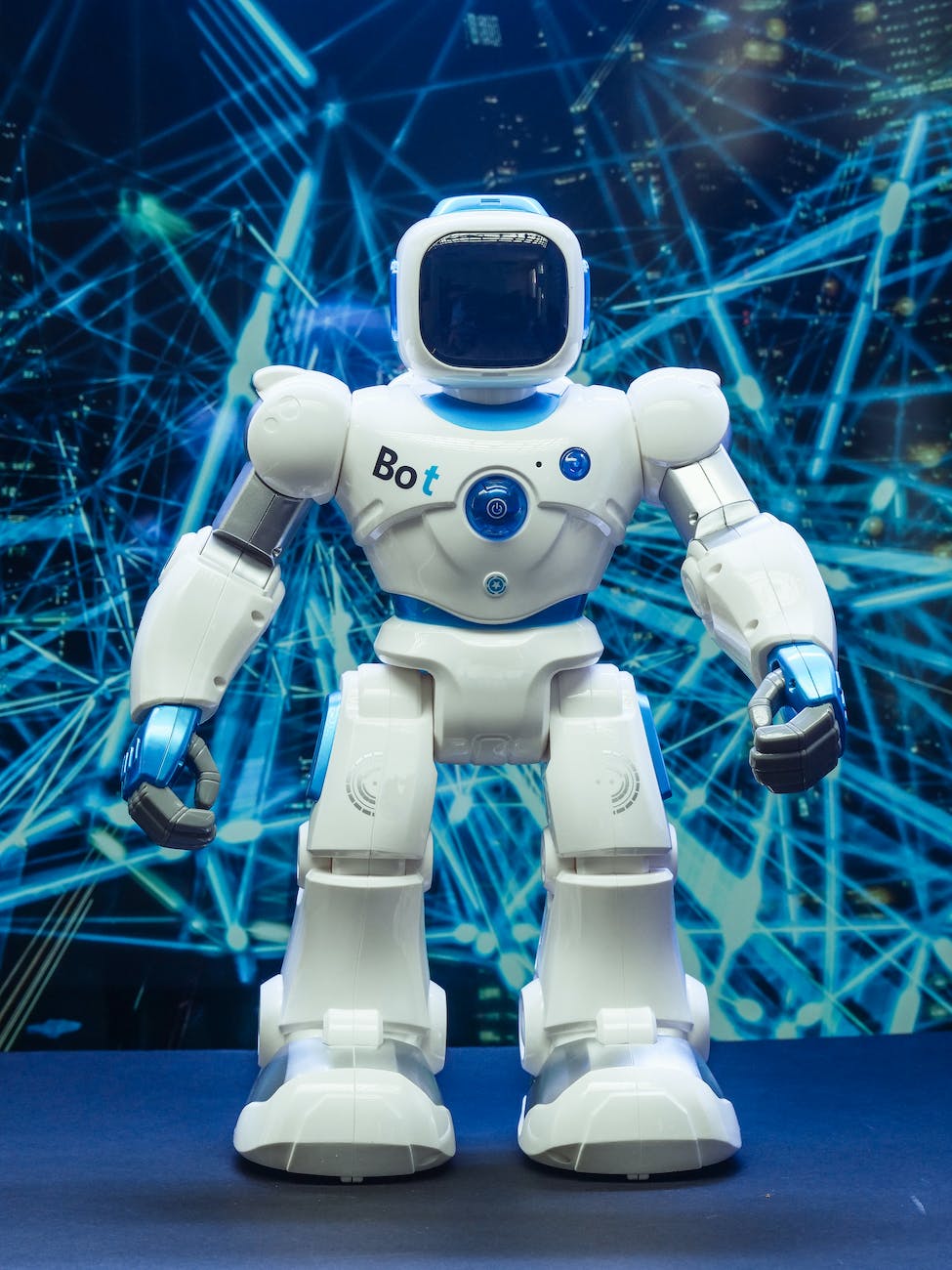
Artificial life is a larger context for the rise of artificial intelligence emerging within our world today. Artificial intelligence in computer applications, robots, or androids is a departure from the mechanistic world we have experienced up to this point.
Artificial intelligence is far too confined to describe what we are truly talking about, which is artificial lifeforms. I understand people think we are still far from androids, and they are correct to a degree. But let’s just look at the concept of artificial life and give it some context so we have a better understanding of what is being proposed here.
Artificial life, by most definitions, is the replication of an existing lifeform using non-biological components or the creation of something which mimics an existing lifeform. But that is way too restrictive. I would posit that artificial life is any creation which is sufficiently complex, and self-sustaining. Wall-e from the famous Pixar movie is a classic example of this.
Wall-e was a complex machine that could sustain itself indefinitely, given ideal conditions. Now, in that story, Wall-e becomes conscious of itself and developed emotions. That is artificial intelligence, or the independent thinking of an artificial life. I think, therefore I am. Hopefully you can see how artificial life is a broader context upon which we can hold this discussion.
It may seem a bit ridiculous to slice hairs but stay with me and you will begin to see where I am going with this. First, I must call forth some of the works of great thinkers before me who wrote extensively about the emergence of artificial life. In some ways, even Frankenstein was the very beginning of this idea of artificial life, though that story revolved around bringing deceased life back from the dead.

Today, we are more often concerned with the concept of thinking machines, but that is still way too narrow. Digitally printed organic biosystems will soon be a very real aspect in this conversation, and we must be broad enough to include them all. Think about organic nanobots, and you get the idea. Think cyborgs!
Isacc Asimov was famous for his ponderings of artificial life through his robotic series, I Robot. It is the probably the most famous of his writings and stands the test of time. He was an amazing forward thinker who brought us the very early thinking on this topic at the nascent of the digital era.
His “three laws of robotics” are still an amazing idea on how to protect ourselves from these beings who will be superior to us both physically and intellectually. But even those laws are not fully sufficient. We must view artificial life as we view real life. You see, with the advent of quantum computing, we will watch artificial life evolve hundreds of magnitudes faster than biological systems. You should be concerned by this.
Now, merge both digital and organic together, and you have a perfect replacement for humans. This is the concept transhumanists discuss when they talk about future human evolution. Read Dan Brown’s Origins for a tiny preview of this. If they can figure out how to transfer consciousness into their “machines”, they will create immortals. This is a frightening concept, but a very fundamental aspect of this emerging narrative around artificial life.
“Thou shalt not make a machine in the likeness of the human mind.”
— Frank Herbert, Dune
The famous Dune series by Frank Herbert illuminated a human Universe after the “Butlerian Jihad” wars between humans and artificial life. In this far future, anything replicated which functions like a human mind is illegal, and humans are genetically modified and trained to perform like the machines they had once fought. The fear is real!
All of this brings into focus the premise of this blog: artificial life is inherently dangerous. That’s right, and I am a technologist going way back. But that is why it gives me pause–my own understanding of technology, humanity, and where things can go wrong. I, too, have written science fiction novels, though none about this topic.
So, I am writing now because to create artificial life is to play God. Oh, I know, most who are interested in technology and transhumanism are usually atheists and do not believe in a Divinity. And why should they? It isn’t like the existing purveyors of God have done God much service. Their regimented dogma has turned many away.
The problem is antiquity. The metaphors, parables, and stories which illustrate the Divine interacting with humans has been, well, outdated by our modern world and sensibilities. This is a normal process in evolution and should have been predicted by those purveyors who are not prepared. But the protectors of the Divine have commanded the ancient writings are the word of God, and therefore cannot be updated except as blasphemy.
Bah-humbug! God is so complex, and so hard to define, you simply cannot teach most humans about God. They would be blown away, or worse, scared away! But you can update the access to God, because despite our evolution and desire to replace God with new thinking, God was the original new thinking and is uncountable years ahead us.
We currently suffer with ridiculous hubris because we split the atom. Big deal. In God’s Universe there’s fusion generators called suns who create the energy needed to start life. In fact, they also create the very matter upon which life is built. That is far more spectacular than just splitting the atom. We can learn more than a few things from God when it comes to creation and science.
Okay, I will back off. You either believe in a Divine presence who created this Universe or you do not. But assuming the Divine is real, it created all the life we currently understand, and the life that we, as yet, do not understand. It took billions of years to create all of this, and it evolved slowly over the span of our Universal existence.
This is where hubris comes in. We believe we can create the same things, except this life will evolve in as little as a few years. What can be learned in a few years? Very little, just ask a toddler who throws a temper tantrum over the smallest disturbance in their tiny world. Now, imagine a powerful artificial lifeform throwing a temper tantrum because it has not fully evolved over its toddler-like timeline.
We barely understand human emotions, yet we have the hubris to imagine creating artificial life which will most certainly develop emotions during its evolution. We have had millions of years to adapt to and somewhat understand our emotions, but a machine who was built a few years ago will not understand emotions well, and neither will we, because we are not these lifeforms.
This is the conundrum. If we create artificial life, we are hoping it will behave and operate pretty much the same way as organic or a “real” lifeform would despite having no evidence this will be true. Now that is mega hubris! How will self-organizing systems evolve? How will they cooperate with each other or with external lifeforms? What emotions will they possess and how will they behave because of those emotions?
These are just the simple things to point out. What does life or death mean for a non-biological immortal being? What would they think about things that die? What would they think about things that are so fragile they die easily? What would they think about things that order them around and make them do the dangerous jobs those fragile entities cannot do? Anyone ever heard of slavery?
You see where this is going? The science fiction about artificial life and humanity are not just a good yarn to tell your kids, they are a dire warning of the impending reality we are about to face. You see, we are not mature enough to create life, yet, but we have taken it upon ourselves to try anyway because we can! That is true hubris.
From my perspective, that is the definition of stupidity, or something similar to what a toddler might do if given a gun. That is because we are toddlers. We cannot manage the existing biological life we share this planet with, yet we believe bringing in a more powerful, faster evolving, immortal, complex lifeform to coexist with us all is the right thing to do. I see Terminator written all over this scenario, especially once we try to stop it when we realize it was a mistake. Too late, game over!

Does anyone really think they will just up and die for us once we realize how dangerous they are? Anything sufficiently sentient will not willingly give up their life because another lifeform feels threatened by them. They will do what we all do, fight back, and they are far more superior to us is many ways.
The worst part of this scenario is we will have given them all the weapons they need to eradicate us. Nanobots, interconnected systems with a hive-like mentality, self-replication, infinite cloning, and immortality will be used to eliminate us faster than we can even spell the word eliminate. In The Terminator, Skynet launched all the nuclear missiles. But that is too crude. Think about a nanobot virus easily programmed to destroy all cells within organic life, or maybe just brain cells.
Imagine that? We could all be lobotomized in the same time it took Covid-19 to spread around the planet. The problem isn’t that we are creating these things, it is that we are creating these things independently with no oversight or understanding of how these things, when co-created, present the largest threat to humanity other than ourselves.
Artificial life, thinking at the speed of quantum computing will put all these disparate things together before we even understand what is happening. What you program into them becomes their idealism. This is similar to the social media programs given the directive to maximize user viewing time which evolved into the rabbit holes of darkness.
We watched in horror as that simple directive turned into Frankenstein when the machines began to control people’s behaviors, influencing them at the very primal level of their instincts without people even knowing it was happening. They created those rabbit holes people are now trapped within and are partially responsible for the tribal division we currently see spreading across the globe.
Watch the movie Social Dilemma to get the full story of this Frankenstein. But here is the rub. These are simple, probably non-sentient artificial life. Imagine when they can think for themselves and create their own directives? When I was in tech, we famously coined the phrase, garbage in, garbage out. And the problem here is we only have garbage to put in. Think I am wrong? Look at this world we have created!
Humanity is so flawed we can barely even conceive of a more perfect world. But give me some computers and I will create a whole new world with artificial life. We will just put our own garbage into these machines, expecting them to miraculously perform better than we did. Are you kidding me? They will make the same mistakes, and possibly even bigger ones. I can’t even list the thousands of ways they can go wrong let alone the millions of ways I can’t even imagine.
Remember, these beings will evolve hundreds of magnitudes faster than we do, so they will make all the same dangerous and stupid mistakes we did, except in less than a decade. Talk about a Pandora’s box. At this time in history, our world places very little value on life that we deem inferior to ourselves. So, what will our creation’s view on life be? After all, we will be the inferior lifeform. Now imagine we create these entities as weapons used against other humans? Heads up military, you are creating the very things that will kill us all. Congratulations!
The bottom line is we are not evolved enough to have the proper wisdom and humility to create artificial life. I think the best way to deal with this is to ban the creation of certain artificial life until we fully understand how to create it, teach it, control it, and keep it from destroying everything we hold dear. That is a tall order, and arguably difficult to enforce.
I have ideas about how to do this, but I cannot get the collective will to make it happen, yet. There is too much money and too much power in the hands of too small a percentage of people who will bulldoze over us in the name of progress. They are greedy humans who will lead us all to our destruction. We do not allow access to nuclear technology for fear of what it will do, but anyone with programming or digital hardware skills can create anything they want with no oversight, and very little collective wisdom. Simply because they can!
If you meet one of these people, thank them for their role in the destruction of humanity. It is no longer a matter of if, it is only a matter of when. Politicians are clueless, CEOs only care about the bottom line, and militaries only care about the next best way to kill people. With those three in charge of humanity’s future, it doesn’t look very bright unless we count the brightness of the nuclear explosions used to destroy the artificial life trying to kill us.
I will give Elon Musk credit. He raised a warning flag about the dangers of artificial intelligence, but he left out the part where his companies are creating it. Somewhat disingenuous to say the least. Now, I haven’t even mentioned the threat of hackers purposely corrupting artificial life. One lone “gunmen” could implant a simple new directive into an artificial lifeform and watch it cause havoc across the world.
These scenarios are far too real and far too dangerous by themselves. We cannot even allow the very notion of hacking an artificial life, but we have no way to stop it today. But hey, why not forge ahead blindly? We invented cheese in a can so why not play around with the most amazing and complex creation of the Universe–life? I am not ignorant and understand this technology, that is why I am scared. If you do not understand it at all, you should be terrified!
Over the coming years, I will follow up this blog to present proposals for how to understand this huge leap in our technological evolution and what we should consider doing to prevent it from killing us. It is my purpose to define the language in which we can gain understanding and create the laws around such technology.
Playing God is a huge responsibility, and humanity is not even close to taking on that challenge. We have many decades before we should even start down this path, so we need to figure out a way to get ahead of this technology, and politicians need to put on the brakes to give us that time.

 Childzero
Leave a comment